
Board of equalization
Board of Equalization to Review Property Values
KIRKSVILLE, MO – Kent Bryant, Assessor of Adair County, announces that the Board of Equalization will convene at 9:00 a.m. on Monday, July 20, 2026, at the office of the Adair County Commission. The purpose of these meetings is to hear from property owners who disagree with the value of real estate and personal property established by the Assessor for tax year 2026. The board tentatively plans to conclude the hearings by 3:30 p.m. on Wednesday, July 22, 2026.
According to the Assessor, impact notices were sent on June 8th to owners whose real property increased in assessed value by at least $200. As required by law, the assessment books will be returned to the County Clerk. The next step in the property tax process involves a review of assessments by the county Board of Equalization followed by the setting of levies by the political subdivisions.
Property owners who believe that the Assessor has incorrectly classified or valued their property are encouraged to contact the County Assessor’s office at (660) 665-4423 for an informal hearing prior to the Board of Equalization. If an informal hearing isn't desired or proves unsatisfactory, an appeal can be filed. Appeal forms are available on the County website www.adaircountymissouri.com or through the County Clerk’s office at (660) 665-3350. The deadline to submit an appeal and evidence is Monday, July 13, 2026, with completed appeal forms to be delivered to the County Clerk’s office by 4:30 PM on that day.
Property owners appearing before the board should be prepared to present their appeal and evidence to establish what they believe to be the correct value of their property. If, after a decision of the board, the property owner is still dissatisfied with the assessment, the appeal may be lodged with the State Tax Commission and thereafter to the circuit court.
2026 State of the County Address, by Presiding Commissioner Mark Shahan
2026 State of the County
|
The County of Adair is presenting the 2026 Proposed Budget which has been prepared by the County Commission and the Clerk of said Commission. The budget process is factored in the current economy and objectives of the Elected Officials. Adair County General Revenue Fund increased $477,699.49 or 27%, the Road and Bridge Fund decreased $170,132.91 or 7%, and the Law Enforcement General Fund decreased $12,348.37 or 2%. This included a transfer of funds ($1,183,156) from the Law Enforcement Services Fund into the Law Enforcement General Fund to cover 2025 expenses. The 2026 budget includes all the necessary funding for the county departments to provide quality customer service to the public. It also includes federal and state grant funds for multiple services. The Adair County Commission exhausted the remainder of the American Resue Plan (ARPA) funds. The amount expended during 2025 was $848,723.42. With the addition of a solar facility built within the county, the assessed valuation of Adair County has increased to $558,381,056. This is an increase of $127,088,667 from the assessed valuation of the county in 2024. A 3% salary adjustment for all employees was approved by the County Commission. The Commission chose to exclude the Elected Officials from receiving the salary increase. The County continues to fully fund the LAGERS pension plan, one half of the CERF pension plan, and the Prosecuting Attorney's retirement plan. In addition, Adair County offers a health care insurance plan, with a minimal participation cost based on their choice of coverages, to eligible full-time employees as well as Elected Officials. Also included in the benefit package is a family AIR EVAC membership that is of no cost to the employee or Elected official. Adair County continues to collect a ¼ cent sales tax passed by the voters in April 2021 to finance the restoration of the Historical Adair County Courthouse. As of December 31, 2025, the balance of the outstanding loan was $5,366,306.08. The loan is scheduled to be paid in full on or before September 1, 2032. The Commission reviewed the revenues from the sales tax and budgeted to make an extra payment on principal. A payment of 300 K was made towards principal in 2026. The Commissiion will review Annualy the balance of the revenue from the ¼ cent sales tax and if the funds will allow we will continue to pay extra on principal. We are currently planning on the Loan to be paid off in 2030 This would be 2 years ahead of schedule. This would then sunset the collection of the ¼ cent sales tax. The budget law requires a detailed and precise compilation of the budget document. It is an overly complex law. Our goal is to create a fiscal document to provide services to the citizens as well as visitors to Adair County. The Adair County Commission and the Adar County Clerk want to thank the Elected Officials and staff for their efforts in compiling the 2026 budget. Other accomplishments that were achieved by the Commission in 2025 was becoming an AGRI Ready County. This was accomplished by working with Missouri Farmers Care, this ACT also required all 3 Commissioners to be in support of the Order. Another big move was the implementation of SB-190 which allowed qualified seniors to apply for a Homestead tax credit. As of this week we have processed over 500 applications and will continue to take applications until June 30th. The Commission is looking Forward to another great year here in Adair County. To start off with the Kiwanis Farmers Market, NEMO Fair, Summer on the Square, Red White and Blue Festival, Red Barn and many other Festivities planned for 2026. Kirksville Winter Lights and Hometown Holidays continues to be a great winter attraction and I’m sure it will be even better this year. The County Commission wants to encourage all to take the opportunity to enjoy our communities’ festivities this coming year. We want to thank all that are presenting today and thanks to the Chamber for hosting. Have a great year! Mark Shahan, Presiding Commissioner. |
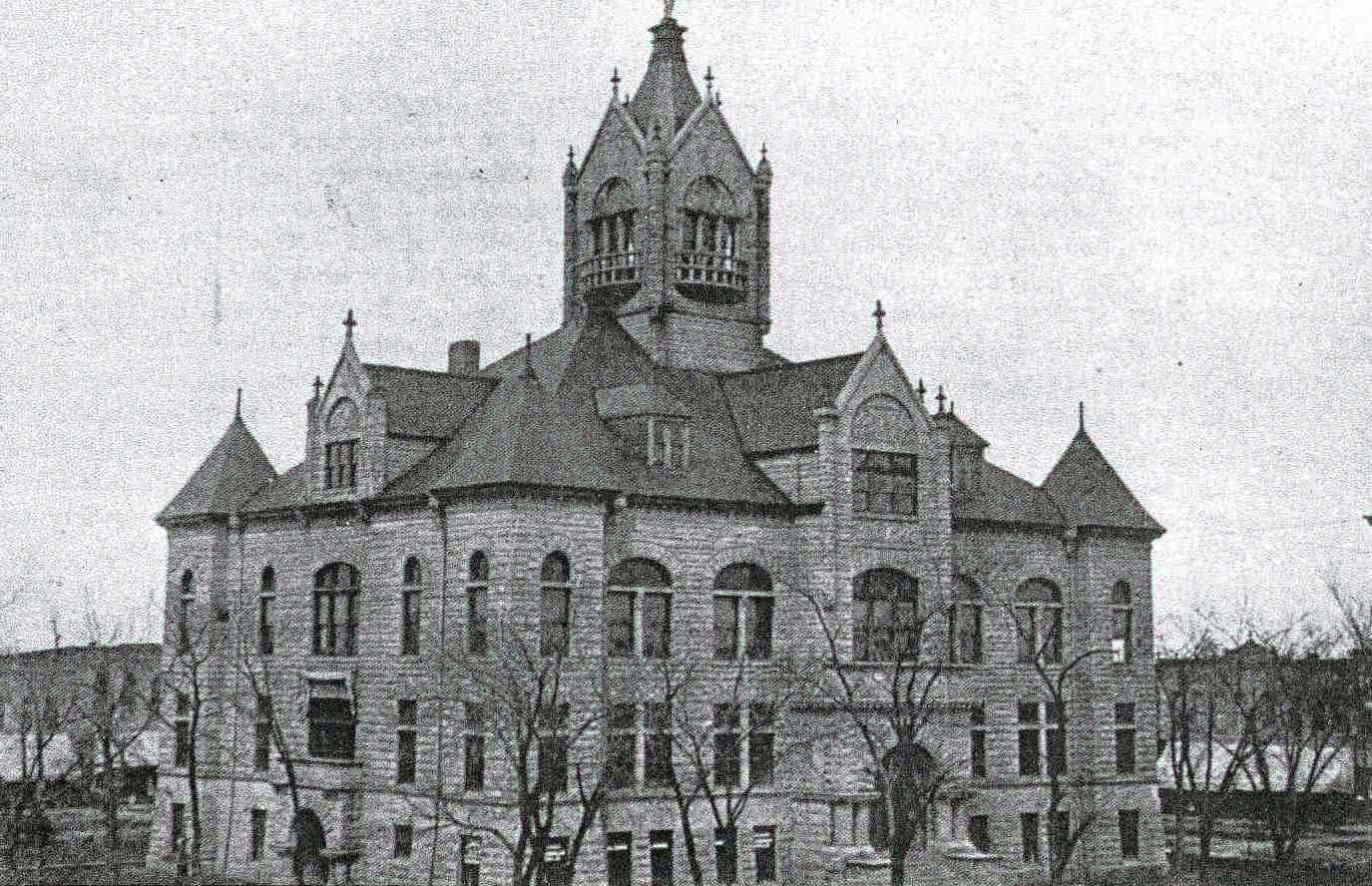
Welcome to Adair County, Missouri
Located in northeast Missouri, Adair County has a population of 25,165, based on the 2022 census, and covers 569 square miles with the county maintaining approximately 700 miles of roadway.
Adair County was founded on January 29,1841 and was named after John Adair, the eighth Governor of Kentucky. The county seat is located in Kirksville, Missouri.
The county is governed by a three member County Commission led by the Presiding Commissioner. Commissioner’s enact and administer local ordinances, approve budgets, oversee spending, and hire county employees.
Adair County operates and exercises its authority through laws expressly granted to them by the state of Missouri.
Services performed by Adair County include:
- Recorder of deeds
- Property tax assessment
- Property tax collection
- Law enforcement and corrections
- Crime prosecution
- Public conservatorships
- Road and bridge maintenance
All visitors must enter via the west entrance and go through security screening. No concealed carry is allowed. No phones allowed in Court Rooms.
Contact Information. For the directory call 660-665-2283
- Assessor (660) 665-4423
- 2nd Circuit Clerk of Courts/Municipal Court (660) 665-2552
- County Clerk (660) 665-3350
- Collector (660) 665-3481
- Commission, PC. Mark Shahan 660-234-7915, 1st Dist. Bill King 234-7926, 2nd Dist. Gayla McHenry 234-7927.
- Courthouse Maintenance (660) 234-7002
- Recorder (660) 665-3890
- Rural HUD Office (660) 665-4615
- Treasurer (660) 665-6755
- Surveyor (660) 342-3944
- Human Resources (660) 234-7914
- Road and Bridge (660) 665-6767